|
Archive
albb 2010
albb 2009
albb 2008
albb 2007
albb 2006
albb 2005
about albb
talks
residency
projects/events/exhibitions
open archive & reading room
internships
Contact
Links
Vietnam
Motoko Uda
Sue Hajdu
Galerie Quynh
Nguyen Nhu Huy
Himiko Saloon
Ryllega Gallery
Salon Natasha
Diacritic.org
Atelier Wonderful
Overseas
OLO
Pasi Karjula
forestcamp
Marko Vuokola
Sten Are Sandbeck
Minna Heikinaho
Com-pa-ny
Bank & Rau
AVPD
frame-fund
HAKOtte?
Sendai ArtCity
Philip Brophy.com
Katrin Paul.com
broadsheet
SASCA
womanifesto
trans urban
X-CHANGE culture-science
Asia Art Archive (AAA)
Arts Network Asia (ANA)
Art Autonomy Newtwork (AAN)
Cemeti Art House
the house of natural fiber
Para/Site
Juliana Yasin
|
a little blah blah (albb) is an artists' initiative that since 2005 has operated as a platform for contemporary art through a wide range of channels including projects, exhibitions & events, screenings, talks, a residency program, internships and an open-access archive of art books & catalogues. Our program has evolved in a pioneering spirit, in response to the gaps and needs of the Saigon art scene. Since 2008 we have re-focussed our program to presenting one major project each year, capacity building and the ongoing running of albb Reading Room.
|
|
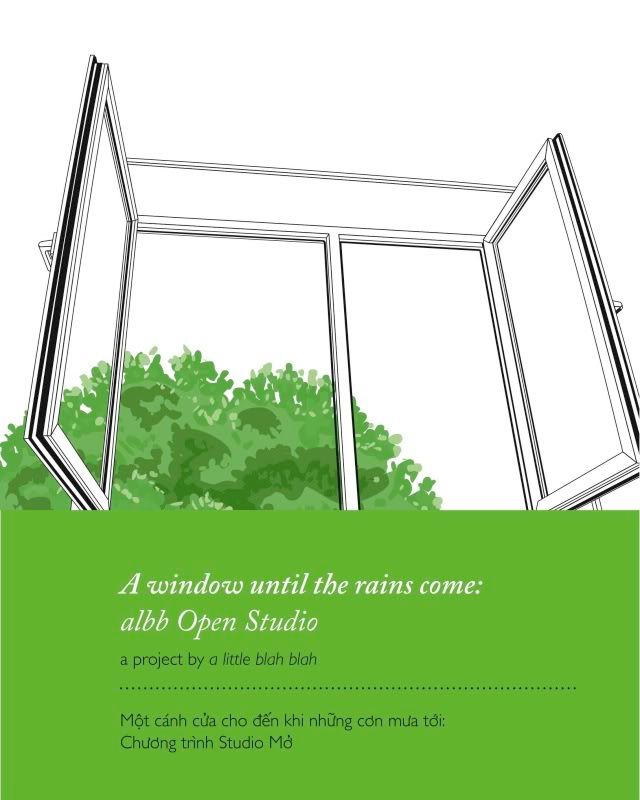
A window until the rains come: albb Open Studio program
|
|
follow this project on FACEBOOK: click here
theo dõi dự án này trên FACEBOOK: click here
albb’s major project for 2010 turns an existing café into a creative space where art meets the public in Ho Chi MInh City. For 10 weeks, right in the heart of District 1, selected local and overseas artists take over a downtown space to use as their studio from 6 to 12 days each. The general public can visit freely to see first-hand how artists work in their studios, to take a workshop or to roll up their shirtsleeves and get involved in a creative project.
A window till the rains come: albb Open Studio Program aims to create a flexible, relaxed and spontaneous space of interaction between artists and everyday people. Artists are free to work in this open studio setting as they please. From time to time, members of the general public will stop by, to observe, chat, participate, perhaps even assist the artist with their work. Some may make repeated visits, forming friendships, unexpected relationships or spontaneous communities. The project thereby creates a discussion and interaction zone that dissolves the isolated space of artists’ studios and the mystique of art practice, and creates a two-way interaction flow between artists and everyday people. All participating artists speak English or can speak Vietnamese or have bi-lingual assistants to help them with Vietnamese-speakers.
Participating artists are encouraged to occupy the space quite fully, and to actively produce work that is highly visual or highly material. They are not required to complete works during the time of this project, simply to work or experiment as they normally would in their own studios.
The 36m2 space at PI-CHANNEL features beautiful natural light through a large window that looks down onto the colonial period trees in Le Thanh Ton Street. This fashionable area is bustling with restaurants, bars, boutiques and shops, busy all through the day and into the night.
This project will span the period between Tet (Lunar New Year) and the start of the monsoon season. One never knows exactly when the rains will come. Looking out of the front window of their temporary studio at PI-CHANNEL, one of the last artists in the program will watch with excitement as the first storm for 2010 breaks over Saigon.
24 Feb 2010 - 02 May 2010
9AM - 9PM daily
@ PI-CHANNEL shop, upstairs
31B Le Thanh Ton, District 1, HCM City
PI-CHANNEL website: www.pi-channel.com
PI-CHANNEL facebook: www.facebook.com/3.14channel
|
Participating artists
|
24 FEB - 01 MAR: Tran Minh Duc
/// Vietnam - Ho Chi MInh City
|
|
|
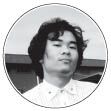
Tran Minh Duc is an independent graphic designer and emerging visual artist. He studied at the College of Culture and Arts, Ho Chi Minh City, a relatively small school teaching a variety of art forms. Duc very much enjoyed this environment, and the fact that he could listen to piano in the morning, cai luong from the Mekong Delta at lunchtime, and the singing class in the afternoon, all the while playing with his own colors and drawings. Born and raised in Saigon, he also has a deep fondness for this city, the way it wakes up in the morning, the way it moves, its particular lifestyle and habits.
Duc first worked with albb on the Bao Loc Project, 2007, where, while assisting Nguyen Kim To Lan he created his own independent project called Standing There for One Night. He also recently took part in the group exhibitions Blink at Sàn Art and We promise you a kiss, at Vân Art Gallery in HCM City. He is part of the team at Me Phim, which organizes screenings of international and local short films and discussion with film makers, film students and film lovers.
Duc’s project in the open studio:
SUNDAY’S SUPERHERO
costume design & tailoring
http://flyingbay.googlepages.com/
http://baolocproject.org/3-DucVie.html
|
03 MAR - 08 MAR: Philip Faulks
/// Australia - Melbourne
|
|
|
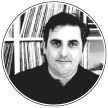
Philip Faulks was born in England and arrived in Australia in 1976 where he lives in Melbourne with his wife and family. He has held thirteen solo exhibitions in various cities in Australia and has been included in over sixty group exhibitions in Australia, Singapore and Venice. He is represented in national and state collections in Australia, including the National Gallery of Australia and the Museum of Contemporary Art and his work is also held in private collections in Australia, England, Ireland, France, USA and Japan.
Philip first traveled in Vietnam about a decade ago. This will be his sixth visit to HCM City, where he has been building friendships and professional relationships. He has a long-standing interest in Asian culture and in Vietnam is attracted to the continuously evolving, dynamic character of this youthful nation. In 2007 he first worked with albb on the Bao Loc Project, for which he was an official observer.
Philip teaches Visual Art at Chisholm Institute and is represented by Ray Hughes Gallery, Sydney, Australia.
Philip’s project in the open studio:
SAIGON DRAWING RESPONSE
work on paper
web.me.com/philipfaulks
www.rayhugesgallery.com
|
09 MAR - 14 MAR: 8Geese
/// Vietnam - Ho Chi Minh City
|
|

|
8Geese is a handicraft collective that was first conceived in 2002 when its eight founding members were studying at the University of Architecture. They were friends who shared a passion for design and were looking for an identity to unite themselves.
Upon graduation, each member of the group pursued her individual career while still embracing the dream of working together. Then, in 2007, 8Geese was established, but the economic crisis of 2008 put a halt to its debut.
The dream was not forgotten. In September 2009, 8Geese caught the attention of people in HCM City with the launch of its sock animal collection. Their products were an instant hit, and were soon featured in AsiaLife Magazine.
The six active members of 8Geese who will participate in A window until the rains come are qualified interior designers, graphic designers, industrial designers and educators. Busy with their day jobs, they produce sock animals in their spare time, each contribute her individual experience, ideas and talents.
8geese’s project in the open studio:
SOCKS AND THE POSSIBLE
soft toy design & construction // workshop
http://8geese.wordpress.com
|
16 MAR - 24 MAR: Freek Drent, in collaboration with Vincent Westgeest
Netherlands - Ho Chi Minh City
|
|
|
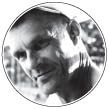
Freek Drent graduated from the Willem de Kooning Academy in painting, drawing and design in 1990. During the final year of his studies he became a member of ExpohenK. With this art-group he organized exhibitions for local and international artists in an old factory site in a historic part of Rotterdam. In cooperation they also realized projects and installations in different countries in Europe. ExpohenK works are held in major art collections such the Caldic Collection and the Groninger Museum in the Netherlands.
During the following years, Freek collaborated with Dutch sculptor, Ron van der Ende, and filmmaker, Stella van Voorst van Beest. His main interest was the transformation occurring in Eastern Europe. He made frequent visits to Romania, where, during one notable project, he worked with left over consumer goods in an umbrella factory.
Freek, who is also known as Fred, became attracted to photography whilst traveling in China. After finishing a residency in Beijing, he made the decision to re-locate to HCM City in 2008. In HCM City he has been photographing by walking around neighborhoods in outlying districts, producing a collection of images of detailed everyday objects and street scenes.
www.freekdrent.nl
|
|
|
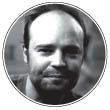
Vincent Westgeest discovered his interest in photography while living and traveling in South America fifteen years ago. Returning to Amsterdam, he enrolled in a 4-year course at the Academy of Photography. During this time, he assisted several professional photographers, including the well-known Dutch photographer, Jan Zwart. The work of world-famous photographers such as Irving Penn, Richard Avedon, Sally Mann, Edward Weston and Julia Margaret Cameron became an inspiration, particularly for their outstanding composition and print quality.
Vincent has explored both artistic and commercial photography, generally working in black and white film with a large format camera. Seven years ago, he started traveling again, this time in Southeast Asia. He spent five years living and working in Cambodia, and has recently re-located to HCM City.
Freek & Vincent’s project in the open studio:
PORTRAITS
studio photography
|
27 MAR - 01 APR: Bill Nguyen
/// Vietnam - Hanoi
|
|
|
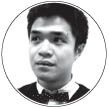
Bill Nguyen is the youngest of the artists taking part in albb Open Studio Program. He returned to Vietnam six months ago after completing his degree at Nottingham Trent University, England, and has been settling into the art community in Hanoi by reviewing exhibitions, interviewing artists and art students, and giving talks. In 2008 he participated in the 10+ exhibition at Nha San Duc, and he is also involved with the art and culture website, Hanoi Grapevine.
In his artworks, Bill combines different aspects of performance with sculpture, installation and text. He is intrigued by human behavior and surroundings, by the relationship between these factors and how they affect, alter and manipulate one another.
The root of this fascination comes from the fact that Bill has always been an outsider and a foreigner, to both Vietnamese and British cultures. However, being twin-cultured is in fact a powerful factor feeding his art practice and helping him to understand, explore and disrupt everyday life through his artworks. No matter what the medium or the location, Bill’s work is always a response to this mixing and matching of cultural differences.
Bill’s project in the open studio:
IN TRANSIT: A 'PAUSE' POINT IN THE MIDST OF BUSY SAIGON
community performance & space intervention
http://billnguyen.multiply.com
|
03 APR - 12 APR: Michael Bullock
/// Australia - Melbourne
&
Radoslaw Stypczynski
/// Sweden – Stockholm
|
|
|
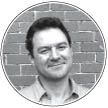
Michael Bullock recently completed his Master of Fine Art at Monash University, Melbourne, where he also works as a sessional lecturer.
In 1999, Michael was awarded a studio residency in Hanoi as part of Australia’s Asialink Visual Arts Residency Program. This was undertaken at the Hanoi College of Industrial Design. He has also spent time in other parts of Vietnam, participating in the Third International Sculpture Symposium, Hue, 2002 and The Fourth International Sculpture Symposium, An Giang, 2003. His ongoing interest in Vietnam’s history, cultural and art inspired him to take up Vietnamese lessons back in Australia, allowing him to forge friendships and absorb another cultural perspective more fully in his work as an artist. This will be Michael’s fourth visit to Vietnam.
Solo exhibitions include Rubber Fish at the Australian Embassy, Hanoi, 1999 and at Gallery 4A, Sydney, 2001, and Chuyển Thể, at Gertrude Contemporary Art Spaces, Melbourne, 2003. Michael has also participated in group exhibitions and competitions in Australia and internationally.
Michael’s project in the open studio:
THE TRAFFIC OF OBJECTS AND IMAGES
sculpture / installation
|
|
|
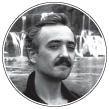
Radoslaw Stypczynski was born in Poland and has been living in Sweden since 1981. He holds an MFA from Umeå University of Fine Arts.
Radoslaw, better known as Radek, first visited Vietnam seven years ago as an exchange student at Hanoi’s Fine Art University and has returned to Hanoi eight times since then. Passionate about Vietnam, he has learnt the language, taking him into Vietnamese communities, not only in Vietnam but also in Poland. The winter of 2007-08, Radek went to Warsaw where he followed a group of Vietnamese immigrants in collaboration with Ylva Landoff Lindberg, resulting in Birds of Passage, a photo/video-installation.
In Radek’s imagery there are often elements traceable back to the graphics of the early-era video games that he played on his 8-bit computer as a kid. The rugged edginess of his works is a result of Commodore 64 influences mixed with the lacquer painting he encountered in Hanoi. His own take on the technique is called “Contemporary Nordic Lacquerpainting”, an adaptation of lacquer where he utilizes the disadvantages that come with the drier climate and completely differing materials that are available to him in Sweden.
Radoslaw’s project in the open studio:
CONTEMPORARY NORDIC LACQUERPAINTING
mixed media & lacquer on MDF
http://oioi.reks.se
|
14 APR - 18 APR: Archie Pizzini
/// USA - Ho Chi Minh City
|
|
|
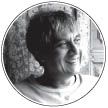
Of Hispanic background, Archie Pizzini grew up in Texas and was educated in both fine arts and architecture. He spent most of his life in Houston, and also worked in New York for a few years before moving to Vietnam in 2005. In HCM City he is partner in the architectural firm, HTA+pizzini Architects.
Archie’s life has followed a double track in which the two strands of art and architecture always seem to be present. The best moments in his creative life are when these two viewpoints add extra dimensions to each other with ideas gaining strength as they bounce between the two sensibilities.
Originally, Archie viewed visual art as a way of trying to preserve what he most loves about certain places, moments or people. His thinking has now moved on to a more realistic position—he uses art practice to savor what delights him and to try to pass that delight on to others.
Life in HCM City yields many scenes of such delight as buildings in this city are almost immediately altered, added to or subtracted from by entirely different people, creating a wonderfully unexpected result.
Archie’s project in the open studio:
CITY TEXTURES, VIETNAM
mixed media
|
20 APR - 25 APR: Simone Boon
/// Netherlands - Hong Kong
&
Marsha Roddy
/// UK - Hong Kong
|
|

|
Since her childhood days, Simone Boon has lived in many different countries such as British Borneo, the Netherlands, Venezuela, Belgium, Malaysia, Austria, and Hong Kong, where she has been based since 2004.
Living in ever-changing surroundings, between east and west, has made Simone sensitive to the multiple ways in which people perceive the world around them. Understanding and mis-understandings are intertwined with the inner paradigms embedded in each of us by the culture of our upbringing. ‘Perception’ has thus become an important consideration in Simone’s work. Another interest that she explores in her work is how life evolves over time, space and place, weaving and layering moments into illusionary patterns.
Simone works with sculpture, ceramics, video and photography. The fact that ceramics is almost as old as mankind itself while photography is less than 200 years old enhances the idea of being involved with something that surpasses time.
Simone is in her last semester for a Masters in Fine Art at RMIT in Hong Kong, and first visited HCM City for a seminar in 2009. The Open Studio program is an exiting opportunity for her to return to share her art practice and create dialogue with the community here.
Simone’s project in the open studio:
UNFROZEN FEMINIMITY
studio photography & movement
www.simoneboon.com
www.cityoneminutes.com
|
|

|
Since the mid-80s, Marsha Roddy has enjoyed a career as a production designer, creating sets and costumes for theatre, film and television as well as undertaking interior design and architectural projects. She has lived in Amsterdam, as well as Los Angeles where she designed for a number of feature and independent films including, the award winning 73 Virgins. Marsha has also designed for numerous dramatic productions at many of the UK’s most prestigious theatres including: Waiting for Godot at The Crucible Theatre, Sheffield; Romeo and Juliet, East is East at the Leicester Haymarket; Amen Corner at the Lyric Theatre, London; and Cafe Vesuvio at the Manchester Royal Exchange. She was also responsible for the costume designs for the BBC’s Big Dance in Trafalgar Square.
More recently, Marsha has devoted herself to a Masters in Fine Art with RMIT Melbourne. This has given her time to explore and execute some of the ideas that have remained, until now, inside her sketchbooks. One of the ideas concerns what she calls “energy drawings”, a continuous stream of daily drawings connecting with our conscious and unconscious minds. Marsha’s first visit to HCM City was in 2009 as a part of her Master’s program.
Marsha’s project in the open studio:
LIFE FORCE
drawings on paper
|
27 APR - 02 MAY: Susan Olij
/// Indonesia - Singapore
|
|

|
Susan Olij was born in Indonesia in 1974. She has a background in fashion design, which she studied in the UK and USA before working in the field in both the USA and Singapore. She later received a scholarship to study visual art at LaSalle College of Arts / Open University London in Singapore where she completed her Masters in 2009. Susan has exhibited in Singapore, Indonesia and Australia. This is her second visit to Vietnam.
Susan’s passion to share art and creativity led her to take up a position lecturing at LaSalle College of the Arts and to establish Olij Studio, where she offers creative workshops to people of all ages and backgrounds.
Her interests as an artist include communication, psychology and drawing. Her multi-disciplinary art practice is fuelled by cross-cultural studies and theories of thought and belief systems. Running Olij Studio is a perfect avenue to continue her research into such areas, especially as concerns creativity. She is currently developing a specialized course in drawing, using the research and science of the right brain.
Susan’s project in the open studio:
THE MISSING LIST(S) 2010
drawing on rice paper, photography
www.susanolij.com
www.olijstudio.com
|
Thanks
|
Our thanks to all of the following, whose hard work and generous support have enabled this project to happen:
Project concept & direction: Sue Hajdu
Project Manager: Luong Tu Dung
Project team @ PI-CHANNEL: Ngo Dung / Doan Do / Helen Huong
Graphic design & layout: Doan Do (PI-CHANNEL)
English texts: Sue Hajdu
Vietnamese translations: An Huynh (PI-CHANNEL), Bill Nguyen & Tran Minh Duc
and: Hanoi Grapevine / Vo Nguyen Mai Tram / Le Thua Tien / OUT2-Studio / Duy from April / Archie Pizzini / Tran Minh Duc / Sophie Hughes / Hoa from San Art / Vo Thanh Lien Anh
all photographs © respective authors
This project is generously supported and hosted by:
PI-CHANNEL
31B Le Thanh Ton, District 1, HCM City
+84.4 38 220 253
www.pi-channel.com
www.facebook.com/3.14channel
|
|
